APQP Guide
 KIMEC|Expert Group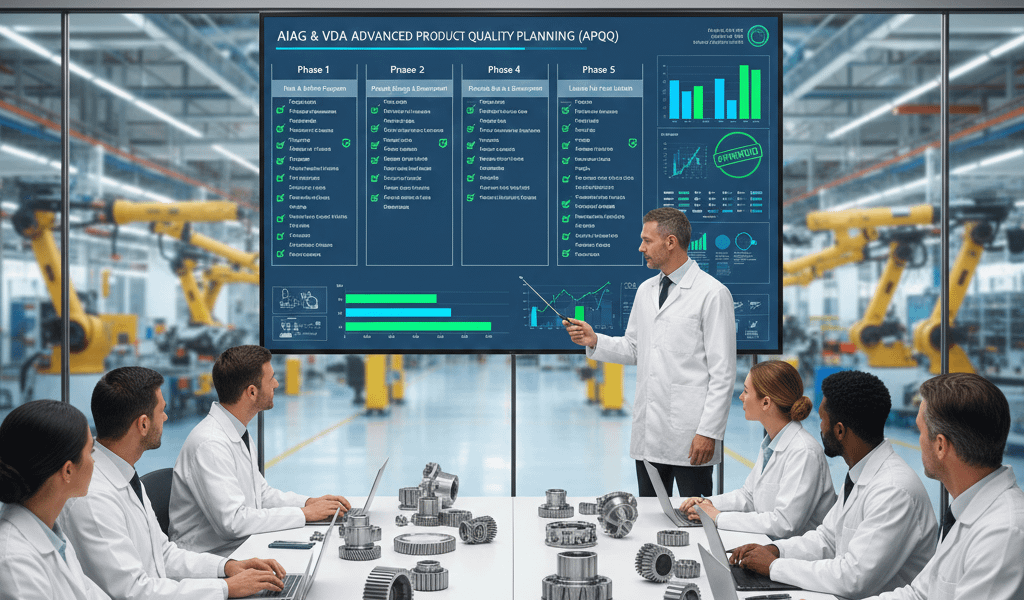
Advanced Product Quality Planning (APQP):
A Complete Guide to Zero-Defect Launches
🎯 Goal
To provide engineers and project leaders with a clear roadmap for implementing APQP — ensuring compliance, minimizing risk, and achieving consistent quality from concept to launch.
📘 What is APQP?
Advanced Product Quality Planning (APQP) is a standardized, cross-functional methodology widely applied in the automotive and manufacturing industries. It ensures that new products meet customer requirements, minimize risks, and support defect-free and on-time launches.
APQP is closely aligned with IATF 16949 and guides teams through clearly defined phases and deliverables.
APQP is not just compliance — it is a strategic framework that ensures reliable and successful product launches.
🎯 Key Objectives
- Translate customer requirements into accurate product & process specifications
- Identify and mitigate risks early
- Validate processes for stable, repeatable quality
- Support on-time launches and continuous improvement
🧭 The Five Phases of APQP
| Phase | Purpose | Key Outputs |
|---|---|---|
| 1. Plan & Define Program | Capture customer requirements and establish scope, timeline, and resources | Customer specs, project plan, feasibility analysis, initial risk assessment |
| 2. Product Design & Development | Design the product to satisfy customer and regulatory needs | DFMEA, design verification, drawings, validation plan |
| 3. Process Design & Development | Create the manufacturing process, tooling, and quality controls | PFMEA, process flow, control plan, work instructions |
| 4. Product & Process Validation | Validate production under real conditions and gain approval | PPAP, capability studies (Cpk), MSA, test reports |
| 5. Feedback, Assessment & Corrective Action | Monitor performance post-SOP and implement improvements | CAPA, updated FMEAs, continuous improvement logs |
🛠 Core Tools & Deliverables
- DFMEA / PFMEA — Risk identification and mitigation
- Control Plan — Defines how critical characteristics are monitored
- PPAP — Customer approval package before production
- MSA & SPC — Ensure measurement reliability and process stability
- Work Instructions & Layouts — Operator guidance and visual layouts
✅ Best Practices
- Engage cross-functional teams early
- Maintain living documents (FMEAs, control plans, work instructions)
- Use data-driven gate reviews for go/no-go decisions
- Validate measurement systems before capability studies
- Plan supplier PPAPs to ensure readiness before release
🚀 First-Time Implementation Tips
- Start with a pilot program
- Update deliverables after each review
- Hold short weekly cross-functional meetings
- Automate SPC and MSA data collection when possible
- Document decisions and trade-offs for transparency
📋 Gate Review Checklist
Use gate reviews to ensure readiness before moving to the next phase. Each review should confirm:
- All deliverables are complete and approved
- Risks are identified and mitigated
- Resources are aligned for the next phase
- Customer and internal requirements are met
Gate A2
Entry deliverables for initial feasibility and planning.
- A2Feasibility Study Sign-off
- A2Project Plan
- A2Product Description
- A2Quality Objectives
- A2Lessons Learned / Knowledge Transfer
- A2Customer Specific Requirements
- A2Critical Characteristics
Gate A3
All A2 documents, plus detailed planning for product/process release.
- A3All A2 documents
- A3Significant Characteristics
- A3Pass-Through Characteristics
- A3Process Characteristics
- A3Process Flow Chart
- A3Operation Plan
- A3Product (Design) FMEA
- A3Test Planning / Development Release
- A3Control Plan
- A3Planning of Plant, Tools, Fixtures, Equipment
- A3Status of Sub-suppliers
- A3Packaging & Labeling Planning
- A3Personnel Capacity & Qualification
- A3Manufacturing Prototypes
- A3AECQ, Robustness Validation, Mission Profile
- A3Functional Safety
- A3Activity & Responsibility Agreements
- A3Cyber Security
- A3CQI / Qualification of Special Processes
Gate A4
Preparation for safe launch and production readiness.
- A4All A3 documents
- A4Safe Launch Plan
- A4Process FMEA
- A4Coordination of Production Control
- A4Inspection Plan
- A4Procurement of Tools & Equipment
- A4Planning of Preventive Maintenance
- A4Planning of Inspection Equipment
- A4Status of Purchased Parts
- A4Corrosion Prevention
- A4Material Flow
- A4Cleanliness
- A4Traceability
- A4Station Release
- A4Suitability of Inspection Process (MSA)
Gate A5
Validation, capability studies and release documentation.
- A5All A4 documents
- A5Layout Inspection & Functional Testing / Annual Revalidation
- A5Audit Planning
- A5Field Failure Analysis / No Trouble Found
- A5Machine Capability Study (CmK)
- A5Preliminary Process Capability Study (Ppk)
- A5Procurement of Inspection Equipment
- A5Release of Product and Process Development
- A5Cyber Security
- A5PPAP-related documents (IMDS, Initial Samples, Submission Level, PPAP Approval)
Gate A6
Production capability verification and maturity assessment.
- A6All A5 documents
- A6Capability Verification (Run @ Rate)
- A6Maturity Level Assurance for New Parts
- A6Assessment for Serial Production Release
Gate A8
Final release items and long-term capability.
- A8All A6 documents
- A8Final Audit Planning
- A8Long-term Process Capability Study (Cpk)
⚠️ Common Mistakes to Avoid
- Late involvement of manufacturing or procurement → rework risk
- Shallow FMEAs → root causes missed
- Skipping MSA → unreliable Cpk/Ppk results
- Poor supplier oversight → delayed PPAP or nonconforming parts
🧠 Final Thoughts
APQP is more than compliance — it is a proven framework to launch products right the first time. By following its five phases, leveraging the right tools, and avoiding common mistakes, organizations can:
- ✅ Launch on time and with confidence
- ✅ Reduce risks across the supply chain
- ✅ Strengthen customer satisfaction and trust
- ✅ Drive continuous improvement and competitiveness
🌐 APQP Landscape: AIAG and VDA
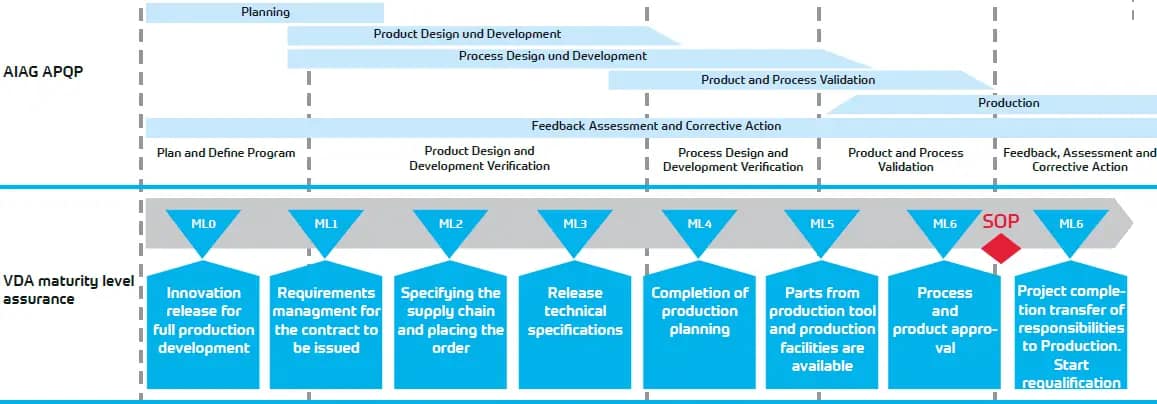
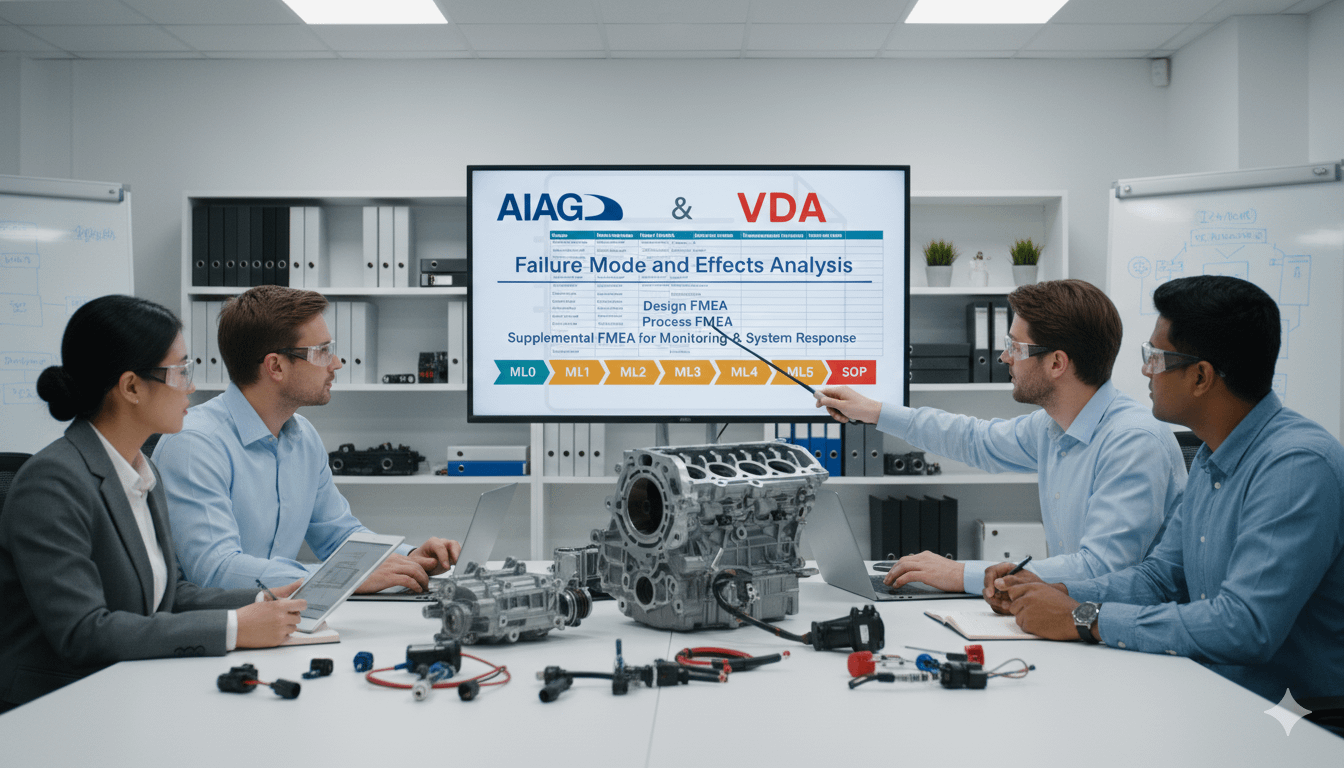
Both AIAG and VDA support APQP as a foundational quality planning tool. While AIAG emphasizes structured deliverables and timing, VDA integrates APQP into broader risk and maturity models. Aligning with both ensures global readiness and OEM compliance.
작성자 소개



1 1
dsgxcfchncncvnbv