Thermal Management Evolution
 KIMEC|Expert Group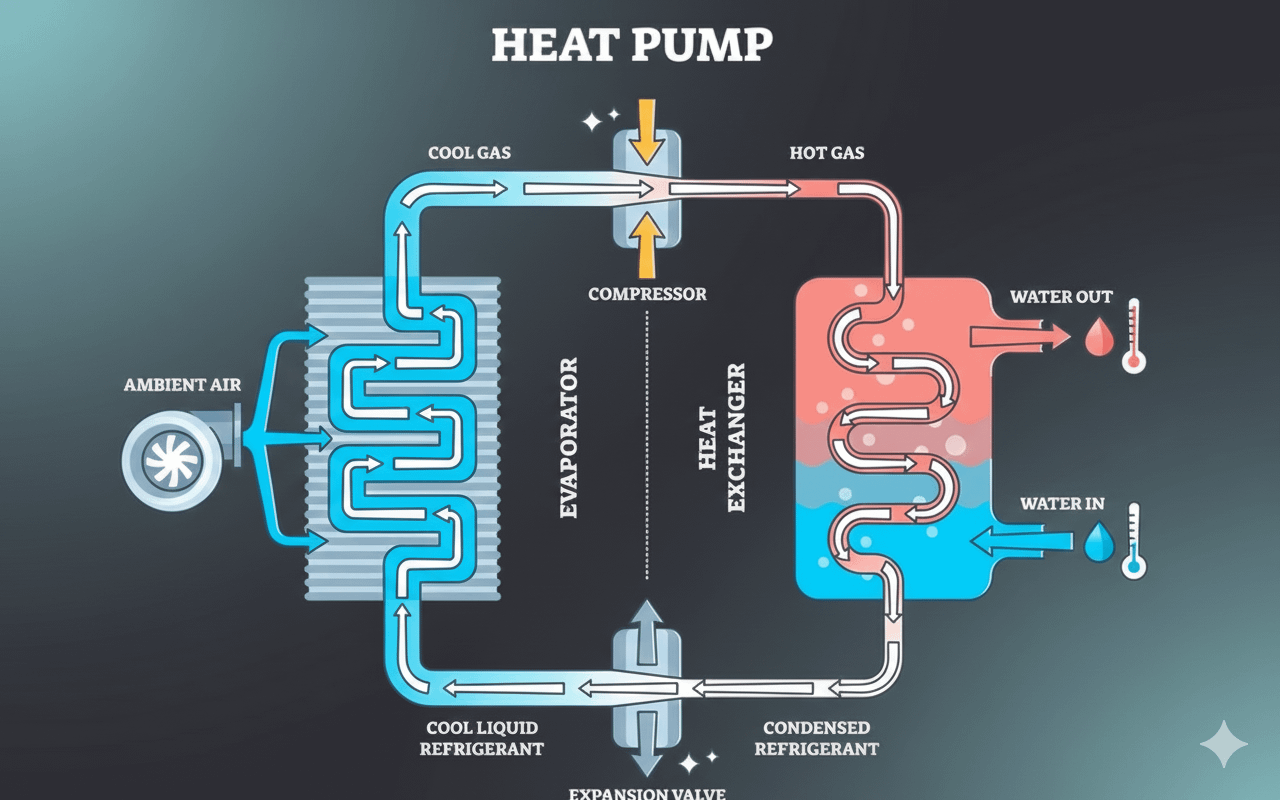
❄️ Thermal Management Evolution: The Future of EV Efficiency and Performance
The shift from internal combustion engines (ICE) to electric vehicles (EVs) has transformed the engineering landscape. Instead of managing combustion heat, EVs rely on a highly coordinated thermal ecosystem where the battery, power electronics (PE), and cabin HVAC continuously exchange heat and energy.
At the center of this transformation is the Integrated Thermal Management System (ITMS)—a unified, intelligent platform that determines how efficiently, safely, and comfortably an EV operates. The future of EV range, charging speed, and longevity depends on how well this system evolves.
1. Why Integration Matters: The Case for ITMS
Early EVs used separate thermal circuits for the battery, power electronics, and cabin HVAC. This decentralized setup created inefficiencies, particularly in cold weather, leading to dramatic “winter range penalties.”
An Integrated Thermal Management System approaches the vehicle as one interconnected thermal organism. It optimizes heat generation, transfer, and reuse to reduce energy consumption and enhance performance.
Core Objectives of ITMS
- Maximize Range: Reduce HVAC energy draw using high-efficiency heat pumps.
- Protect Battery Health & Safety: Keep the battery within its optimal 25–35 °C window.
- Enable Fast Charging: Pre-condition the battery for high-power DC charging sessions.
2. Key Technological Trends in Today’s ITMS
The EV industry is rapidly advancing toward modular, efficient, intelligent thermal architectures.
2.1. Heat Pumps: The Centerpiece of Modern ITMS
Modern EVs rely on a Vapor Compression Heat Pump (VCHP) as the primary heating and cooling device.
How it Works:
The heat pump extracts low-grade heat from outside air, battery modules, or waste heat from the motor/inverter, then concentrates and redirects it into the cabin or battery.
Why It Matters — COP Advantage:
With a Coefficient of Performance (COP) > 2.5, a heat pump can deliver 2.5+ kW of heat for every 1 kW of power consumed, dramatically reducing winter range loss.
2.2. Multi-Loop Thermal Architecture & Smart Valve Control
Advanced ITMS typically coordinate three main loops:
- High-Temperature Loop (HTL): Motor + inverter cooling
- Low-Temperature Loop (LTL): Battery thermal management
- Refrigerant Loop: Core heat pump cycle
Smart Coolant Control Valves (CCV) dynamically route coolant between loops, enabling:
- Waste-heat harvesting
- Rapid battery heating during cold starts
- Efficient PE cooling during high-load driving
This flexibility allows the vehicle to respond instantly to diverse thermal demands.
2.3. Integrated Thermal Management Modules (ITMM)
Leading suppliers (e.g., Hanon Systems, Marelli) are consolidating pumps, valves, heat exchangers, and sensors into Integrated Thermal Management Modules.
Benefits include:
- Reduced assembly complexity
- Fewer leak points
- Smaller packaging footprint
- Centralized, precise control
These modules are becoming the backbone of next-generation EV thermal design.
3. Future Directions: Where ITMS Is Heading
The next decade will bring unparalleled improvements in autonomy, efficiency, and integration.
3.1. AI-Powered Predictive Thermal Control
Future ITMS will be proactive, not reactive. Using AI, telematics, and navigation data, the system will predict and prepare for upcoming thermal events.
Examples:
- Pre-conditioning the battery before arriving at a DC fast charger
- Adjusting HVAC to balance comfort and energy efficiency
- Learning driver preferences to reduce unnecessary climate loads
These predictive strategies reduce energy consumption and enhance user experience.
3.2. Advanced Cooling Technologies
As EVs approach 800V architectures and extreme fast charging, heat generation intensifies. New cooling solutions are emerging:
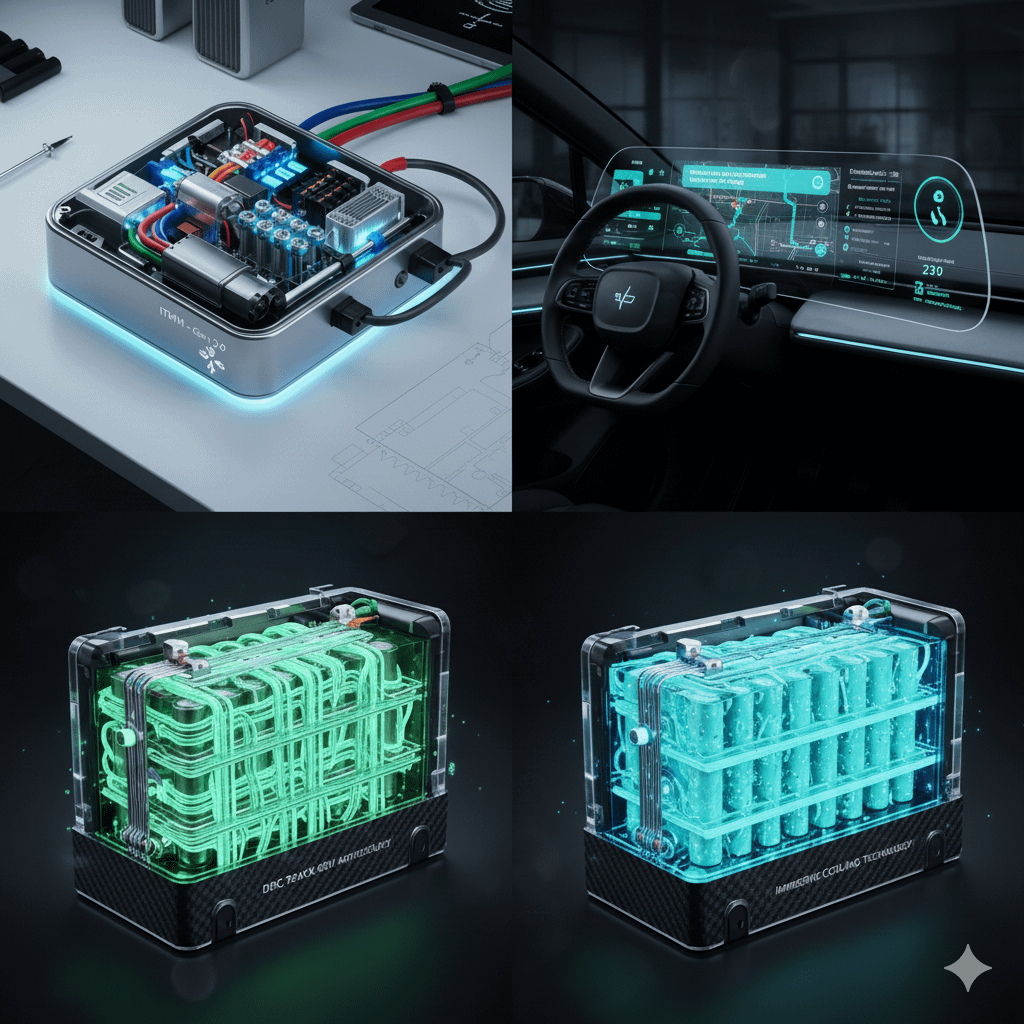
Direct Refrigerant Cooling (DRC)
Refrigerant flows directly into the battery cooling plates, offering superior heat extraction compared to water–glycol mixtures.
Immersive Cooling
Cells are submerged in a dielectric fluid, providing:
- Full-surface thermal contact
- Excellent temperature uniformity
- Better safety against thermal runaway
- Support for ultra-fast charging
These technologies represent the next frontier in battery safety and performance.
3.3. Integration into Software-Defined Vehicle (SDV) Architecture
Thermal systems will soon become part of centralized domain control, operating alongside propulsion and chassis management.
Key SDV benefits:
- Centralized Computing: Unified optimization across all vehicle systems
- Over-The-Air (OTA) Updates: Thermal efficiency improved continuously via software
- Data-Driven Refinement: Real-world usage helps refine algorithms over time
The thermal system becomes smarter as the vehicle ages.
🔍 Conclusion: The EV as a Thermal Machine
In the age of electrification, an EV’s true performance is defined not just by its battery or motor, but by its thermal intelligence. Integrated thermal management is no longer a luxury—it is essential to achieving:
- Longer range
- Faster charging
- Better safety
- Higher efficiency
- Greater comfort
As heat pump technologies evolve, system architectures become modular, and AI takes hold, ITMS will be one of the most defining pillars of next-generation electric mobility.
작성자 소개




https://shorturl.fm/rkH67
https://shorturl.fm/vHBwm
https://shorturl.fm/OtolL
https://shorturl.fm/fkLRR
https://shorturl.fm/Xo7NA
https://shorturl.fm/y2JnL
https://shorturl.fm/y2JnL
https://shorturl.fm/3anfi
https://shorturl.fm/0KCT4
https://shorturl.fm/1gWd1
https://shorturl.fm/716aj
https://shorturl.fm/SWW2E
https://shorturl.fm/hnbFZ
https://shorturl.fm/GNzGy
https://shorturl.fm/PHoBW
https://shorturl.fm/TPMqk
https://shorturl.fm/rMYP6
https://shorturl.fm/d2z1M
Claim 5% Rebate and Exclusive Bonuses on AsterDEX https://is.gd/CGTnqR
Unlock exclusive affiliate perks—register now!
Turn traffic into cash—apply to our affiliate program today!
Start earning on every sale—become our affiliate partner today!
Turn traffic into cash—apply to our affiliate program today!
Share our products and watch your earnings grow—join our affiliate program!
Share your unique link and cash in—join now!
Share your unique link and earn up to 40% commission!
Your network, your earnings—apply to our affiliate program now!
Share our link, earn real money—signup for our affiliate program!
Start earning on autopilot—become our affiliate partner!
Start earning on autopilot—become our affiliate partner!
Earn passive income on autopilot—become our affiliate!
Join forces with us and profit from every click!
Promote our products—get paid for every sale you generate!
Promote our products and earn real money—apply today!
Monetize your traffic instantly—enroll in our affiliate network!